For most St. Augustine homes, yes. Wright Brothers’ Premier Maintenance Plan is $259.95 a year for one system or $359.95 for two, and it covers a spring AC tune-up and a fall heat pump and heating check. That matches ENERGY STAR’s advice to check cooling in the spring and heating in the fall. Plans are billed per year (semi-annual or monthly billing available with a card on file).
What does an HVAC maintenance plan actually cover?
With Wright Brothers, the Premier Maintenance Plan covers two scheduled visits: a spring AC tune-up and a fall heat pump and heating check. Here’s what actually happens when a tech shows up. Each plan visit is the same full tune-up plus coil cleaning as the $179.95 one-time visit.
What gets inspected during a maintenance visit?
Every Wright Brothers visit includes checking running pressures and a full evaluation of the system. The basic tune-up checks electrical components and connections. Coil cleaning is part of the $179.95 full tune-up and every Premier plan visit, not the basic $89.99 visit. Techs carry basic parts on the truck, so most repairs get finished in one visit.
How many tune-ups does a St. Augustine system need?
Two checkups, one per season. ENERGY STAR recommends checking your cooling system in the spring and your heating system in the fall. That’s exactly how the Premier plan is set up. If you’re on the fence about the fall visit, our post on whether you really need a heating tune-up in Florida walks through it.
Is an HVAC maintenance plan worth it in St. Augustine?
Yes, an HVAC maintenance plan is worth it in St. Augustine. ENERGY STAR says dirt and neglect are the top causes of heating and cooling system failure and inefficiency. A plan puts both of ENERGY STAR’s recommended checkups on the calendar, so you don’t have to remember to book them yourself.
Why does the fall heating check matter in Northeast Florida?
If your home heats with a heat pump, the same system that kept you cool all summer keeps you warm on chilly nights. The fall visit checks that system before the first cold snaps hit. If you’ve ever wondered why a heat pump can blow cool air in winter, that’s worth a read too.
Who gets the most out of a plan?
A plan makes the most sense for homeowners who want both seasons covered without thinking about it. It’s also a good fit for homes with a heat pump that runs year-round, and for homes with two systems, since the 2-system plan runs $359.95.
Between visits, replacing or cleaning your filter can lower your AC’s energy use by 5 to 15 percent.
How much does an HVAC maintenance plan cost in St. Augustine?
Here’s what Wright Brothers charges, plain and simple:
One Time Tune Up, $89.99: a tune-up and inspection that checks electrical components and connections. No cleaning included.
Full tune-up and cleaning, $179.95: everything in the basic tune-up, plus coil cleaning, one time.
Premier Maintenance Plan, 1 system, $259.95 per year: a spring AC tune-up and a fall heat pump and heating check, each a full tune-up with coil cleaning.
Premier Maintenance Plan, 2 systems, $359.95 per year: the same two full tune-ups with coil cleaning, covering two systems.
Running pressures and a full evaluation happen on every visit, no matter which option you choose.
Here’s the math: two one-time full tune-ups with cleaning would cost $359.90 ($179.95 each). The 1-system Premier plan covers those same two visits for $259.95 a year, so you save about $100 a year.
Plan or one-time visit: which makes sense for you?
If you just want a tune-up and inspection with an electrical check, and you don’t need cleaning, the $89.99 One Time Tune Up fits. It covers the basics and gets your system looked over.
Want that plus coil cleaning, one time? The $179.95 full tune-up and cleaning covers everything in the basic visit, plus the coils.
If you’d rather have both seasons on the schedule, a spring AC tune-up and a fall heat pump and heating check, the Premier Maintenance Plan fits. It’s $259.95 a year for one system or $359.95 for two, and each visit is a full tune-up with coil cleaning. Booking those same two visits one at a time would run $359.90, so the 1-system plan saves you about $100 a year.
No matter which option you pick, every visit includes running pressures and a full evaluation of your system.
You don’t have to wait for your next visit to help your system along. The U.S. Department of Energy suggests three simple habits: replace or clean your air filters on a regular schedule, check that your unit’s drain isn’t clogged, and hire a certified professional when your unit needs more than basic maintenance. That last one is where we come in. We’re a Florida Certified Air Conditioning Contractor, so if something looks off between visits, give us a call.
Why St. Augustine homeowners call Wright Brothers
We’re a veteran and family-owned company, and it shows in how we treat your home. Owner Kyle Wright has over 20 years of HVAC experience and holds a Florida Certified Air Conditioning Contractor license, CAC1824035.
We’re rated 5.0 on Google, and we serve St. Augustine along with St. Johns, Clay, and Duval counties. Our techs carry basic parts on the truck, so most repairs finish in one visit.
How much is an HVAC maintenance plan in St. Augustine?
Wright Brothers’ Premier Maintenance Plan is $259.95 a year for one system or $359.95 for two.
Does the $89.99 tune-up include cleaning?
No. It’s a tune-up and inspection that checks electrical components and connections. Coil cleaning is part of the $179.95 full tune-up.
What does the Premier plan cover?
A spring AC tune-up and a fall heat pump and heating check. Each visit is a full tune-up with coil cleaning. Running pressures and an evaluation happen on every visit.
Is the Premier plan cheaper than booking visits one at a time?
Yes. Two one-time full tune-ups with cleaning cost $359.90 ($179.95 each). The 1-system plan covers both visits for $259.95 a year, so you save about $100 a year.
When should I schedule my heating check?
In the fall, before the first cold snaps. ENERGY STAR recommends checking cooling in the spring and heating in the fall.
If my tech finds a problem, can it be fixed the same day?
Often, yes. Techs carry basic parts and components on the truck, so most repairs finish in one visit.
Do you serve my area?
Wright Brothers serves St. Augustine plus St. Johns, Clay and Duval counties. Call to confirm your address.
Who will work on my system?
Wright Brothers is veteran and family-owned. Owner Kyle Wright has 20+ years of HVAC experience, and the company is a Florida Certified Air Conditioning Contractor, license CAC1824035.
When your heater smells like burning during that first cool snap, Northeast Florida homeowners don’t need to panic. Most of the time it’s just dust that settled on the heating elements over the summer, like the electric heat strips in a heat pump or the burners in a gas furnace, and it burns off after a few minutes.
Is it normal for heat to smell like burning?
A light burning smell when turning on heat is normal. Dust settles inside the HVAC system during months of disuse and burns off when the furnace or heat pump fires up.
Around here, the heat sits unused for months. NOAA’s 1991-2020 climate normals for Jacksonville International Airport show the average overnight low dropping from about 62 degrees in October to about 51 in November and 46 in December. So the first chilly nights of late fall are usually when a Northeast Florida heater runs for the first time since last winter, and when that dust burns off.
How long should the burning smell last?
A dust burn-off smell usually fades within minutes and should be gone within an hour or two of running. If it lasts longer than that or gets stronger, that’s not routine dust burn-off anymore. See what to do about it below.
Why does my heater smell like burning every year?
Seasonal disuse causes the same cycle annually. Even a well-maintained system collects airborne dust during spring, summer, and fall. A heat pump burning smell follows the same pattern: dust on the auxiliary heat strips or indoor coil burns away at first use.
Two things cut down on that buildup:
Check your air filter every month, especially in heavy-use months like winter and summer, and change it at least every three months.
Florida’s State Fire Marshal also recommends yearly cleaning and inspection of heating equipment by a qualified professional.
What causes a burning smell when turning on heat?
Dust is the top cause of a burning smell when turning on heat. A home HVAC system, whether a gas furnace or a heat pump, runs air across heating elements (burners or electric heat strips) to warm the air before circulating it through your home. All summer long, dust settles on those elements. When you fire up the heat, that dust burns off instantly. The burning smell you notice is that dust incinerating.
On a heat pump, the smell can come from the backup electric heat strips. MRCOOL’s support guidance says dust on strip heat burns off the first time it runs each season, and that smell typically lasts a few minutes to a couple of hours.
Beyond dust, other problems create that smell and won’t fade on their own.
Dirty air filter. A clogged filter starves the system of airflow, and the equipment overheats as a result.
Blocked vents. Closed or blocked supply vents create the same airflow starvation. Dirty filters or blocked vents make the system work harder than it should.
Overheating blower motor. Heavy dust or a clogged filter can make the blower motor overheat and give off a plastic-like smell.
Something in the ductwork. Something that fell into a vent or the ductwork can also burn. If the smell seems to come from one room, check that vent and remove anything you can safely reach.
Is a dust smell from the heater dangerous?
No. That initial dusty odor runs its course quickly. Carrier suggests opening a few windows and letting the system run for about an hour. But it’s not a safety threat on its own.
If the odor sticks around instead of fading, that’s a different story, a technician needs to check for overheating components or electrical trouble.
When should you worry about a heater smell?
A normal dust burn-off smell is brief, as covered above. A smell that lasts longer or gets stronger tells a different story. Persistent burning odors signal trouble and require professional inspection.
What does a dangerous heater smell like?
Two smells mean trouble. A burning-plastic or electrical burning smell is not normal dust burn-off. It can point to overheating parts or wiring. Shut the system off and call for service.
A rotten-egg or natural gas smell from a gas furnace is different. Leave the house right away and call your gas utility from outside. Don’t try to fix it yourself.
Furnace smells and heat pump smells at a glance
Smell
What it usually means
What to do
Dusty burning smell that fades
Normal seasonal dust burn-off on heating elements or heat strips
Let it run, the smell should clear within minutes and be gone within an hour or two
Burning plastic or electrical smell
Not dust burn-off, could point to overheating parts or wiring
Shut the system off and call for service
Rotten egg or natural gas smell
Possible gas leak from a gas furnace
Leave the house right away and call your gas utility from outside
Burning smell coming from one vent
Something may have fallen into that vent or the ductwork
Check that vent and remove anything you can safely reach
Can a heater smell be dangerous even if I don’t smell smoke?
Yes. Carbon monoxide has no smell, so CO alarms matter. The CPSC recommends a CO alarm in the hallway near bedrooms in each sleeping area, testing it monthly, and a yearly professional inspection of fuel-burning heating equipment.
Is a heat pump burning smell different?
A heat pump burning smell works the same way furnace smells do at first startup. In a heat pump system, the backup heat strips sit inside the indoor air handler, along with the coil and fan motor, and dust settles on all of them during months of disuse. When you switch to heat, those components warm up fast and the dust scorches off and pushes through your vents.
The key difference sits in how a heat pump runs. A heat pump moves heat instead of burning fuel. (That’s also behind why a heat pump can blow cool air in winter.) So the smell comes from surface dust, not combustion.
What should you do if the smell doesn’t go away?
A burning smell when turning on heat that doesn’t fade within minutes and lasts longer than an hour or two of running is not normal. Here’s what to do:
Shut the system off at the thermostat.
Cut power at the breaker, if needed.
Check the air filter, a clogged one can choke airflow and let parts overheat.
Call for HVAC service.
When should you call a technician for a heater burning smell?
Call the moment the odor persists or changes. A faint dusty scent that vanishes is one thing. A sharp, electrical, or plastic-like smell that sticks around is another. If the smell does not clear quickly, pick up the phone. An HVAC professional from our heating repair team can take a look.
Wright Brothers Heating and Air Conditioning is veteran and family-owned. Owner Kyle Wright is a disabled veteran.
We take emergency furnace repair calls, and our techs carry basic parts on the truck, so most HVAC repair jobs finish in one visit. We also handle maintenance and tune-ups to help keep that from happening in the first place. We work on heat pumps and mini splits, and we serve St. Augustine and St. Johns, Clay, and Duval counties.
It’s heating and air done the Wright way for the Wright price. If replacement turns out to be the better call, 0% financing for up to 21 months is available on approved system replacements through Hearth.
Heater smells like burning? The bottom line
A short, dusty smell on the first cool night is normal. A plastic, electrical or gas smell, or a burning smell that hasn’t cleared after an hour or two of running, means shut it off and call.
Frequently Asked Questions
Is it normal for my heater to smell like burning the first time I turn it on?
Yes. It’s usually dust burning off, and the smell should fade within minutes and be gone within an hour or two of running.
What if it smells like burning plastic or wiring?
That isn’t dust burn-off. Turn the system off and call for service.
What should I do if I smell gas?
Leave the house and call your gas utility from outside. Don’t try to fix it yourself.
How often should I change my air filter?
Check it monthly and change it at least every three months.
Does Wright Brothers work on heat pumps and mini splits?
Yes, across St. Augustine and St. Johns, Clay, and Duval counties.
The first cold front of the Northeast Florida winter rolls through, your heat pump kicks on, and the air out of the vents feels cool instead of hot. You check the thermostat. It says heat. So why is your heat pump blowing cold air?
Most of the time, nothing’s wrong. A heat pump works differently than a furnace, and that first real cold snap brings the same questions every year. Here’s how to tell normal from a real problem, and what to do about each.
Wright Brothers Heating & Air Conditioning is veteran and family owned, and we work on heat pumps and mini splits across St. Augustine and Northeast Florida. If the cold air sticks around, call (904) 837-0306. If it doesn’t, keep reading. Your answer’s probably below.
Is it normal for a heat pump to feel cool?
Yes, most of the time. A heat pump usually delivers air between 85 and 93 degrees. Your body runs about 98.6 degrees. Air that’s cooler than your skin feels cool on your hand, even while it’s warming the room.
Compare that to a gas furnace. A heat pump puts out roughly 85 to 100 degree air. A gas furnace runs closer to 120 to 140 degrees. So a heat pump isn’t slacking when it feels cooler. It’s moving heat instead of burning fuel to make it.
That’s the trade-off, and it’s a good one. A heat pump can deliver up to three times more heat energy than the electricity it uses. Lower air temperature, higher efficiency.
Defrost mode: why your heat pump blows cold air for a few minutes
In cold, damp weather, frost builds up on the outdoor coil. Your heat pump clears it with a defrost cycle. For a few minutes the system reverses to melt the frost, and you’ll feel cooler air at the vents while it works.
A defrost cycle usually runs 5 to 15 minutes. Some systems defrost on demand, when frost actually builds up. Others run on a timer, every 30, 60 or 90 minutes in cold weather.
You might see steam rising off the outdoor unit during defrost, and the outdoor fan may stop for a bit. Both are normal. It’s melting frost, not smoke.
A light layer of frost, under a quarter inch, is normal too. Thicker ice, or ice that’s still there after a defrost cycle, isn’t. That’s worth a call.
Aux heat and EM HEAT
When it gets cold enough outside, a heat pump can’t keep up on its own. That’s when auxiliary heat kicks in automatically, adding electric strip heat to close the gap.
Northeast Florida doesn’t get extreme cold often, but it happens. During the January 1985 cold outbreak, Jacksonville’s airport hit 7 degrees and the St. Augustine Lighthouse hit 10. On a night like that, expect your aux heat to come on.
Strip heat is a lot less efficient than the heat pump itself, so you want to use as little of it as you can. Aux heat handles that on its own. You don’t have to do anything.
EM HEAT, short for emergency heat, is different. It’s a manual setting you pick yourself, and it runs the house on the strips alone. It’s a backup mode for when the heat pump itself has failed, like while you’re waiting on a repair. It’s not an everyday setting.
Quick checks before you call
Run through these first:
Thermostat: make sure it’s set to HEAT, not COOL.
Fan: set it to AUTO, not ON. On ON, the fan keeps blowing between heating cycles, and that air feels cool.
Filter: a dirty filter chokes airflow. Check it and swap it if it’s dirty. Got a mini split? Clean its filters too.
Breakers: the outdoor unit and the indoor unit are on separate breakers. Make sure both are on. If one tripped, reset it once. If it trips again, stop and call us.
Outdoor unit: light frost is fine. Thick ice, or ice that won’t clear, isn’t.
Timing: cool air for a few minutes is probably defrost. Cool air that won’t quit is something else.
If the air still won’t warm up after all that, it’s time to call.
Cold air that never lets up. No warm cycle in between means the system isn’t heating.
Ice that stays. Ice that’s still on the coil after defrost can point to an airflow problem, low refrigerant, or a defrost problem.
Cooling worked fine, heating doesn’t. If your heat pump cooled the house all summer but won’t heat now, the reversing valve may be stuck.
Low refrigerant usually means there’s a leak. Topping it off without fixing the leak just puts off the same problem. And refrigerant work needs a certified technician, so it’s not a DIY job.
What happens when we come out
Wright Brothers Heating & Air Conditioning is veteran and family owned, Florida license CAC-1824035. We work on heat pumps and mini splits across St. Augustine and Northeast Florida, and we’re open 24 hours a day, Monday through Saturday, including emergency repair.
We diagnose the problem on-site, tell you what’s wrong in plain terms, and give you the price before any work starts. Our techs carry the basic parts on the truck, so most repairs get finished in a single visit. If it’s a bigger job, we walk you through your options. Learn more about our HVAC repair service.
A little upkeep before the first cold front goes a long way. Change your filter on a regular schedule. Keep leaves, shrubs and mulch clear of the outdoor unit so air can move around the coil.
Why does my heat pump blow lukewarm air instead of hot air?
Heat pump air usually runs 85 to 93 degrees, which is cooler than your body at 98.6. It feels lukewarm on your skin even while it’s warming your home.
Why is my outdoor unit steaming?
Steam during defrost is normal. It’s frost melting off the outdoor coil, not smoke.
What does EM HEAT mean on my thermostat?
EM HEAT runs your home on the backup electric strips alone. It’s meant for when the heat pump itself has failed, not for everyday use.
Can I add refrigerant to my heat pump myself?
No. Low refrigerant usually means a leak, and refrigerant work needs a certified technician to find it, fix it and recharge the system.
Should I set my heat pump way back at night?
Not a big drop, unless your thermostat is built for heat pumps. A deep setback can make the strip heat kick on to catch up in the morning. Heat pump thermostats ramp the temperature back up slowly to avoid that.
Heat pump blowing cold air and nothing on this list fixed it? Call Wright Brothers.
Deciding whether to repair or replace comes down to one thing: what actually makes sense for your system and your wallet. Wright Brothers Heating & Air is veteran-owned and family-owned, and owner Kyle Wright brings over 20 years of HVAC experience to every call, so you get a straight read on whether your AC or heat pump is worth fixing. We fix what makes sense to fix, and we only point you toward replacement when that’s genuinely the better move.
Is It Time To Repair Or Replace Your AC?
Warm air blowing from your air conditioner usually means one of three things: low refrigerant, a failing compressor, or a frozen evaporator coil in the air handler. None of those fix themselves. The real question isn’t what’s broken. It’s how fast you catch it.
Catching a problem early usually keeps it a simple repair. Wait too long, and that same fix turns into a much bigger decision.
How do you know if it’s worth repairing your AC?
Age, symptoms, and how fast you act all matter. If your unit is blowing warm air, struggling to keep up, or cycling on and off, get it looked at before it quits completely. A technician who diagnoses the problem fast and gives you a price up front, before touching the system, takes the guesswork out of that decision.
Should you repair or replace a heat pump the same way?
Yes. The same logic applies to a heat pump as to an AC. Catching trouble early keeps repair costs down. Letting it slide turns a minor fix into a system failure.
Here’s what to watch for:
Thermostat set right, but the house still won’t hold temperature
Warm air instead of cold, especially on hot afternoons
Short cycling or the system running constantly without cooling the house
Ice buildup on the coil or refrigerant lines
Rising bills with no change in how you use the system
Don’t wait on a strange noise or a warm vent. Have it checked before a small repair turns into a bigger decision.
How Long Does An AC Last In Florida?
Florida heat shortens the life of your system compared to milder climates. Your equipment runs nearly year-round here. That nonstop demand wears down parts faster than a system in a cooler state ever sees.
Age is the first thing worth weighing once trouble starts. An older unit with a major failure deserves a different conversation than a newer unit with a minor fix. Ask yourself how many more seasons you can reasonably expect before the next breakdown.
Does regular maintenance actually extend the life of my system?
Yes. A precision tune-up and regular heat pump maintenance keep your equipment heating and cooling efficiently, and catch small problems before they turn into breakdowns. Wright Brothers’ Premier maintenance plan includes a spring AC tune-up and a fall heat pump and heating check.
Do heat pumps last as long as straight AC systems in Florida?
Heat pumps handle both heating and cooling, so they work more of the year. For a heat pump, the real question is whether repairs keep piling up faster than they should for its age. Watch the backup heat, too. When a heat pump struggles, it leans on its auxiliary heat strips, and heat strips can add up to $15 a day if they run more than 12 hours (FPL). St. Augustine averages 22 nights a year below 40°F (NOAA), so a heat pump that keeps falling back on strips through those cold snaps is telling you something. That’s a repair-or-replace signal worth checking before winter.
When you’re staring down a quote, the repair or replace AC decision gets easier if you track the pattern:
Frequent service calls
Rising energy bills despite normal use
Repairs creeping toward what a new system would cost
Age pushing past what you’d expect for Florida’s climate
Should You Repair Or Replace Your Heat Pump?
Weigh the repair quote against what a new system would cost, along with the unit’s age and how often it has needed repairs.
Should I repair or replace my heat pump?
Get an honest diagnosis and a price before any work starts.
“Came out and fixed the problem. Didn’t try and do something which wasn’t necessary. Suggested as a follow up fix if required.” (Dean L., Yelp)
Not sure which way your system is headed? Book online to get $50 off your first service, or call (904) 837-0306.
What Signs Mean Your System Needs Replacing?
A system flashing trouble rarely breaks all at once. It tells you first, through skipped maintenance, nagging repairs, and bills that creep higher every month.
A lot of replacements trace back to missed tune-ups. A tune-up keeps your system cooling efficiently and heads off the surprise breakdowns that push homeowners toward a full replacement. When those signs stack up, another heat pump repair or HVAC repair stops making sense, and AC replacement is worth a real conversation. Every maintenance visit should be a thorough, multi-point inspection, not a quick glance at the outdoor unit. That inspection catches failing parts while they’re still cheap to fix.
Watch for these patterns on your own system:
Tune-ups skipped for a year or more
The same small part failing again and again
Breakdowns that keep repeating instead of leveling off
Repair costs climbing with every service call
What Should You Do Right Now?
Grab your phone before you grab a fan. A broken compressor or a dead heat pump won’t fix itself overnight, and every hour you wait in Florida heat costs you comfort and money. Get a real diagnosis before you decide anything.
Here’s the short version: if your system is struggling right now, don’t sit on it. Deciding whether to repair or replace AC equipment starts with a real diagnosis, not a guess from the internet. If replacement turns out to be the right call, Wright Brothers offers 0% financing for up to 21 months on approved system replacements through Hearth.
Who should you call for a repair-or-replace opinion?
Call a Florida Certified Air Conditioning Contractor, not a handyman. Wright Brothers carries license CAC1824035, is BBB Accredited with an A rating, and is rated 5.0 on Google, 4.9 on Angi, and 5.0 on Yelp.
What if you’re not sure the repair is worth it?
Ask for the numbers before you commit to anything.
Request a written diagnosis and repair cost before work starts
Ask how old the unit is and how often it has needed repairs. That question comes up a lot in older markets like Daytona Beach, where the typical home was built around 1980.
First time with us? You get $50 off your first service
Here’s what that looks like in practice:
“Completed the job at the price that he quoted. Rechecked the work to be sure that everything was working properly before he left.” (Frank B., Angi)
Frequently Asked Questions
Do you offer financing on a new AC or heat pump?
Yes, 0% financing for up to 21 months on approved system replacements, through Hearth.
Is there a discount for first-time customers?
Yes. You get $50 off your first service, with no minimum, whether you book online or call.
What areas do you serve?
St. Augustine and St. Johns, Clay and Duval counties.
Is Wright Brothers licensed?
Yes, a Florida Certified Air Conditioning Contractor, license CAC1824035, and BBB Accredited with an A rating.
What does the Premier maintenance plan include?
A spring AC tune-up and a fall heat pump and heating check.
Get a Straight Answer on Your System
Repair or replace comes down to three things: your system’s age, the repair quote, and how often it’s broken. Wright Brothers serves St. Augustine and St. Johns, Clay, and Duval counties, and we do heating and air the Wright way, for the Wright price. Call (904) 837-0306 or book online.
Yes, you need a heating tune-up, even in Florida. Wright Brothers Heating & Air Conditioning, licensed under CAC-1824035, recommends two check-ups a year: an AC tune-up in spring and a heat pump and heating check in the fall before the cooler months. Skip that preventive maintenance and you’re gambling on a system that’s been running nearly year-round without anyone checking its safety, efficiency, or airflow.
Key takeaways
St. Augustine averages 22 nights a year below 40°F; inland Jacksonville averages 46 (NOAA).
Heat strips can add up to $15 a day if they run more than 12 hours (FPL).
A neglected heat pump can use 10% to 25% more energy than a well-maintained one (U.S. DOE).
Why Does St. Augustine Heat Demand a Tune-Up?
Year-round warmth is the reason your system needs regular attention. That means your equipment rarely gets a real break. Most homeowners up north get a few months of downtime before their heat pump kicks back on. You don’t get that luxury living near the water. Add in the salt air rolling off the coast and the long, humid stretch that runs from spring through fall. That combination wears down coils, corrodes components, and stresses parts faster than drier inland climates. It doesn’t matter if you’re near the historic district or out toward World Golf Village. The strain is the same across St. Augustine.
Trane notes a heat pump can start defrost cycles when it’s in the low 40s outside, so those cold nights are when the defrost controls, reversing valve, and heat strips get tested.
How often should you schedule a heating tune up?
Wright Brothers recommends a heating tune up twice a year, an AC tune-up in spring and a heat pump and heating check in the fall. That schedule keeps your system safe, reliable, and ready the first time temperatures actually drop. Since your system runs nearly nonstop in this climate, skipping a season increases the odds of a breakdown when you least expect it. If you’d rather not keep track of it, Wright Brothers offers a maintenance plan with scheduled visits.
What happens if you skip maintenance?
You risk a system pushed past its limits at the worst possible time, usually during a sudden cold snap. Neglected equipment burns more energy, shortens its own lifespan, and can void your manufacturer’s warranty. Preventive maintenance protects your investment and keeps bills lower. Here’s what coastal conditions do to unmaintained systems:
Salt exposure accelerates corrosion on outdoor components
Humidity strains moisture-handling parts year-round
Nonstop run cycles wear down parts faster than seasonal use
Wright Brothers Heating & Air Conditioning, veteran and family-owned, services homes across St. Augustine and Northeast Florida with this exact climate in mind.
What Happens During a Heating Tune-Up Visit?
A heating tune up covers a full, multi-point inspection of your system, not a quick glance at the furnace or heat pump. In St. Augustine homes, where cold snaps hit fast, that thoroughness matters. Skip it, and you risk a system that quits on the first cold morning. Your technician works from a set checklist every single time. No guesswork, no shortcuts. That checklist covers components like the coil and the refrigerant level, along with electrical connections, airflow, and safety controls. Consistency is the point: every home in St. Johns County gets the same careful review, whether it’s a historic downtown cottage or a newer build near the coast.
What does a technician actually check?
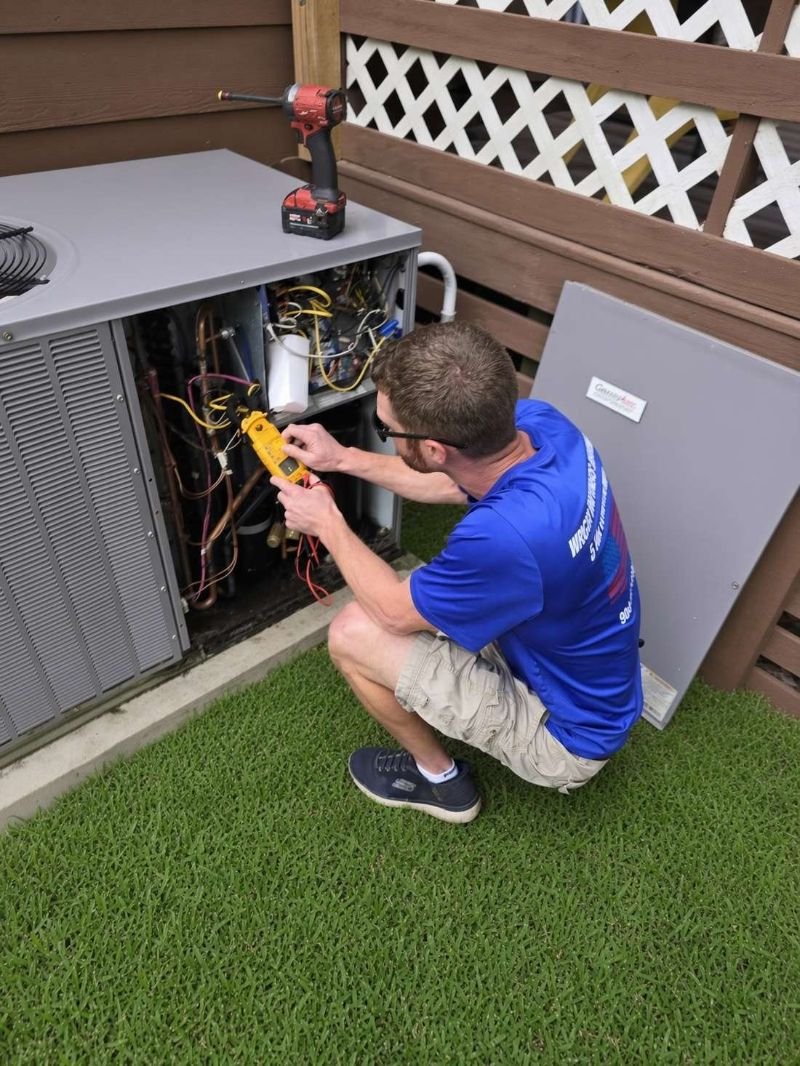
The coil and refrigerant charge top the list, since both affect how efficiently your system heats your home. Your technician also checks electrical connections, thermostat function, and airflow through your ductwork. Each item gets checked off before the visit is done, so nothing gets missed.
Heat pump heating check: what a pro visit covers and why
Component or test
Why it matters in a Northeast Florida cold snap
Source
Refrigerant charge (measured) and leak check
DOE says to verify correct refrigerant charge by measurement and check for leaks; incorrect charge is a common heat pump problem
Gas furnaces only: burner, heat exchanger, venting
Poorly maintained systems or blocked venting can cause carbon monoxide problems, and CPSC urges a yearly professional inspection of fuel-burning heating systems
Why does a precision tune-up matter for your bills?
A precision tune-up keeps your system running at full energy efficiency instead of straining to compensate for dirty coils or low refrigerant. It also heads off surprise breakdowns during the coldest nights of the year. On top of that, staying current on maintenance protects your manufacturer’s warranty, which can save you real money if a major part fails down the road. The bottom line for your wallet:
Lower monthly energy bills from a system that isn’t overworking itself
Fewer emergency repair calls when temperatures drop
Extended equipment life instead of an early replacement
Warranty coverage that stays intact
Every visit is handled by a licensed and insured contractor holding Florida license CAC-1824035. You know the work meets state standards, not just a technician’s best guess. We covered what a repair visit looks like in our guide to AC repair and heating service in St. Augustine.
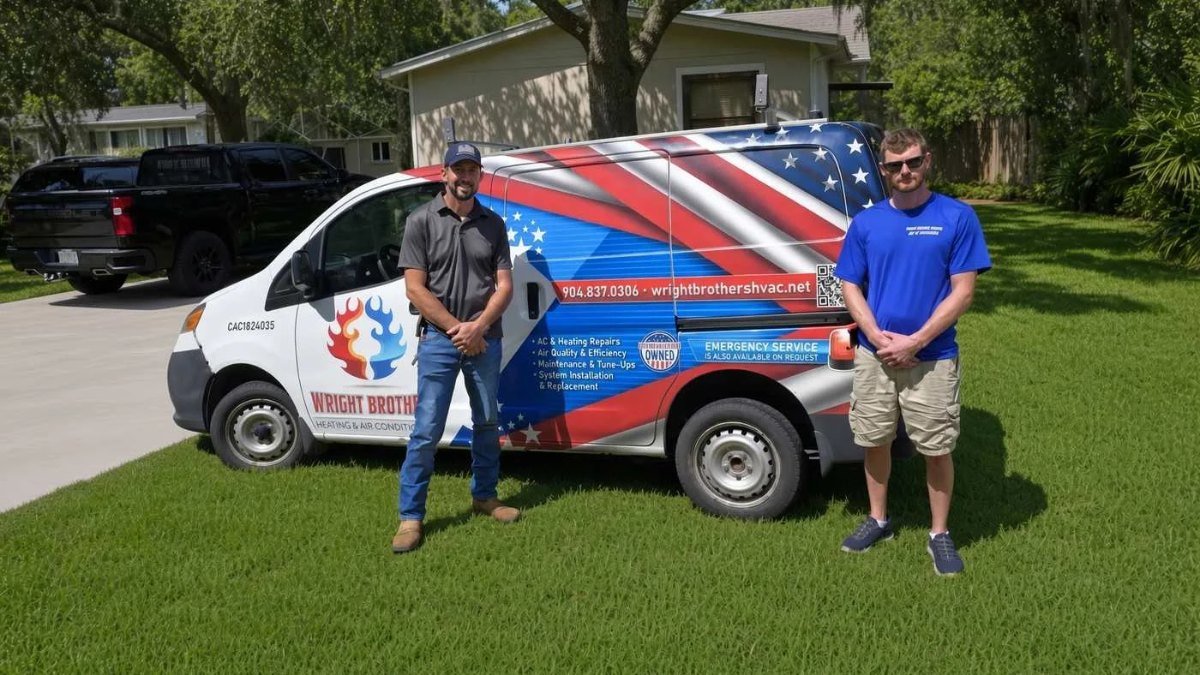
The Wright Brothers crew serving St. Augustine and Northeast Florida.
Why Risk Skipping Maintenance Before a Cold Snap?
Skipping maintenance gambles on a system that has to work harder the moment temperatures drop. A fall heat pump and heating check catches small problems while the weather’s still mild. Here’s what’s really at stake when you skip a season of upkeep:
Small mechanical issues turn into full breakdowns right when you need heat most
Manufacturer warranties can get shaky without documented service history
Energy bills creep up as a neglected system burns more to do less
Indoor air quality suffers when filters and components go unchecked
That’s the real cost of “I’ll get to it later.” If something already isn’t working right, Wright Brothers handles AC and heating repair too.
What does a heating tune up actually catch before winter?
A tune up checks the parts most likely to strain under sudden cold demand, wiring, sensors, moving components, airflow. Catching a worn part in November beats replacing a failed system in January. Wright Brothers is veteran and family-owned, with honest, upfront pricing so you know the cost before any work starts, not after.
Is this normal? A quick cold-snap check
What you notice
Normal?
Source
Steam cloud from the outdoor unit for a few minutes
Wright Brothers Heating & Air Conditioning is veteran and family-owned, serving St. Augustine and homeowners across Northeast Florida. They treat every customer like family, with honest service aimed at catching problems early. Call before the cold snap, not during it.
Heating Safety: Why a Yearly Check Matters
Nearly half (46%) of U.S. home heating-equipment fires happen December through February (NFPA).
Heating equipment is involved in an estimated 37,365 home fires a year, with 417 deaths and $1.2 billion in property damage (NFPA, 2020–2024 averages). NFPA says heating systems should be inspected and cleaned each year before the season.
Gas furnaces only: carbon monoxide can build up when a furnace is poorly maintained or its venting is blocked. CPSC urges a yearly professional inspection and CO alarms on every level of the home and outside sleeping areas, tested monthly. All-electric heat pumps don’t produce CO.
Space heaters: CPSC counts an average of 1,600 portable-heater fires a year, with 70 deaths and 150 injuries (2020–2022).
How Does Tune-Up Service Support Air Quality?
Clean air in your St. Augustine home starts with a system that’s actually maintained, not just running. A heating tune up catches dirty coils, clogged filters, and moisture buildup before those problems start circulating dust and allergens through your vents. Skip that inspection and your household breathes whatever your system pushes out, good or bad.
Why does a tune-up matter for humid St. Augustine homes?
Northeast Florida humidity gives mold and mildew every advantage inside a neglected HVAC system. A tune-up clears the condensate drain line and checks your ductwork for leaks and airflow, so small moisture problems get caught before they turn into a musty smell. Skipping this step lets moisture sit and multiply, quietly working against your health long before you notice a smell.
What should a homeowner expect from a tune-up focused on air quality?
Filter inspection and replacement recommendations
Coil and drain line checks for mold-friendly moisture
Airflow evaluation to confirm clean air reaches every room
You get service built on fair pricing and straight answers, not upsells. That’s what veteran and family-owned service looks like, honest work behind every visit. If a breakdown hits or you’ve got a quick question about your air, we’re open 24 hours a day, Monday through Saturday, with Sunday closed.
How Do You Book a Tune-Up Locally?
Booking a heating tune up in St. Augustine takes three steps: call, book online, or send a quick message, then pick a time that works. Wait too long and you risk scheduling around a cold snap instead of ahead of one.
Your service crew works out of a home base at 2649 Isabella Ave, right here in St. Augustine, FL 32086.
What Are the Service Hours?
Hours run 24 hours a day, Monday through Saturday, with Sunday closed. That schedule gives you room to book a daytime slot instead of waiting for a breakdown. Flexibility like this matters most before winter, when a neglected system is most likely to quit on you.
Don’t wait for a cold morning to find out your furnace maintenance got skipped, whether you’re running a furnace or a heat pump. A quick call now saves you a rough one later.
Ready to Schedule Your Heating Tune-Up?
A heating tune-up in St. Augustine isn’t just maintenance, it keeps your home reliably warm heading into the cooler months. Wright Brothers is veteran and family-owned, and you approve the price before any work starts. Book your fall heating tune-up before the cooler weather hits, or call (904) 837-0306 to get on the schedule.
Frequently Asked Questions
How often should I get my HVAC system tuned up in Florida?
Wright Brothers recommends two check-ups a year: an AC tune-up in spring and a heat pump and heating check in the fall.
What gets checked during a tune-up?
Every visit follows a multi-point checklist, including the thermostat, electrical components and wiring, the blower and fan motor, safety controls, the air filter, and the condensate drain line.
Can skipping maintenance affect my warranty?
It can. Most manufacturers require documented annual maintenance, and skipping it can void your coverage.
How cold does it actually get in St. Augustine?
NOAA’s 1991–2020 normals put St. Augustine’s average January low at 47.8°F, with about 22 nights a year below 40°F and 4.5 below freezing. Inland Jacksonville averages 46 nights below 40°F and about 14 below freezing. The area’s record low is 7°F, set in Jacksonville on Jan. 21, 1985 (NWS).
Why is my heat pump blowing steam, and why does the thermostat say AUX?
That’s usually the defrost cycle. Trane says the outdoor coil runs 10 to 20°F colder than the air, so defrost can start in the low 40s. The reversing valve briefly flips the refrigerant flow, and backup heat strips (shown as AUX) keep the house warm. Call for service if AUX stays on when it’s above about 40°F (Trane), or if defrost cycles keep getting longer while ice builds up.
How much can emergency or auxiliary heat add to my bill?
FPL estimates auxiliary heat can add up to $15 a day if it runs more than 12 hours a day, based on 7.5 kW strip heat. FPL advises raising the thermostat no more than two degrees at a time so the strips don’t kick on unnecessarily.
Does salt air affect my outdoor unit even if I’m not on the beach?
Carrier notes salt water can be carried as far as two miles inland and can cause galvanic corrosion that leads to refrigerant leaks. Some standard warranties, such as Trane’s, exclude salt corrosion of coils unless a Sea Coast Kit is installed. If you live near the water, like beachside in Daytona Beach, that’s one more reason to keep up with yearly service.
Is a burning smell normal the first time I turn on the heat?
A dusty smell that fades quickly is normal: it’s dust burning off (Trane). A burning-plastic smell points to an electrical problem, and a rotten-egg smell means a possible gas leak. In either case shut the system off and call. For a gas smell, leave the home first.